🔥 Witchcraft 101: A Gentle Guide for Beginners
Your first steps into magic should feel safe, grounded, and empowering. 🕯️ For the Embers of the World If you’re new to witchcraft and you’re
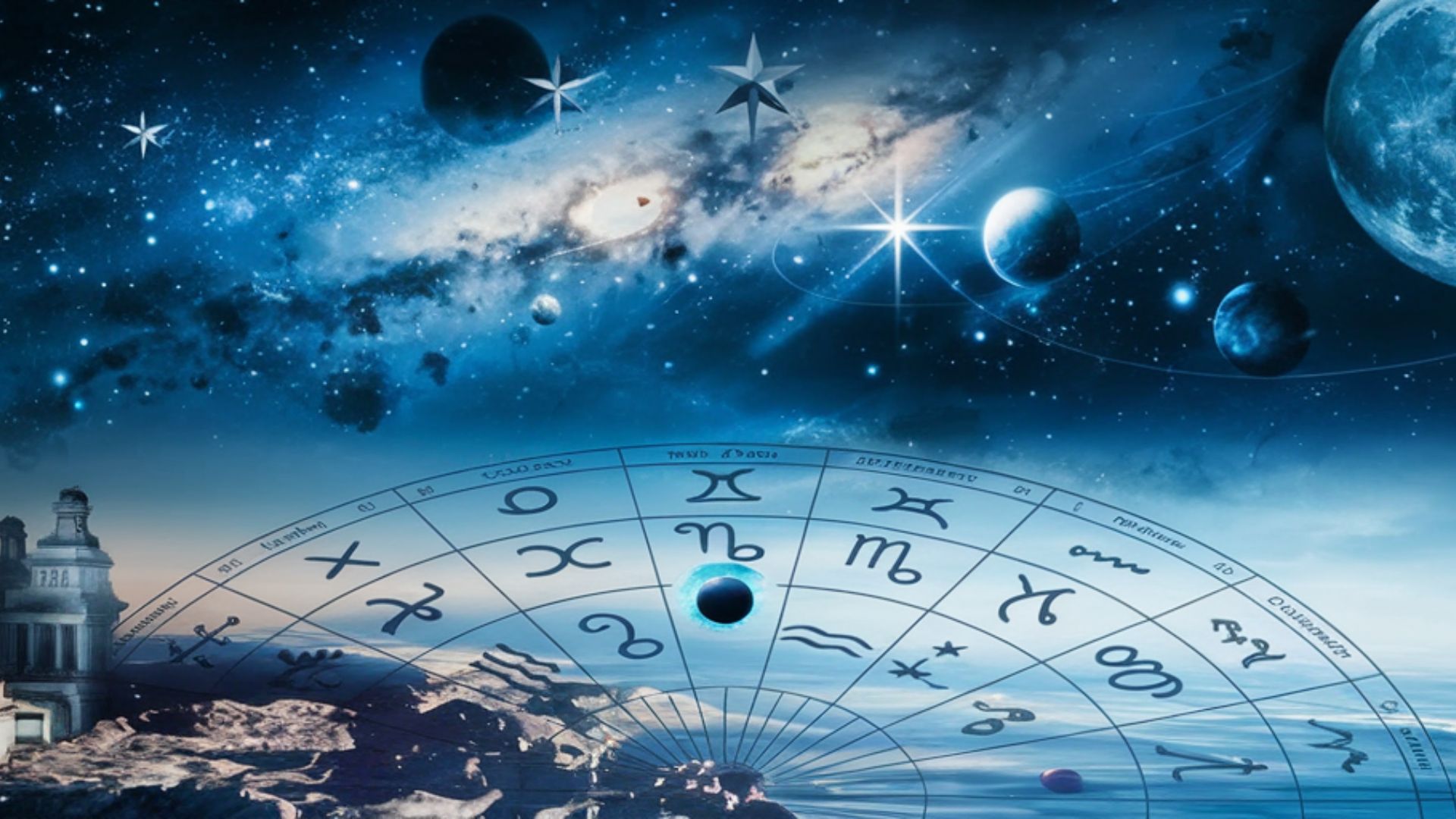
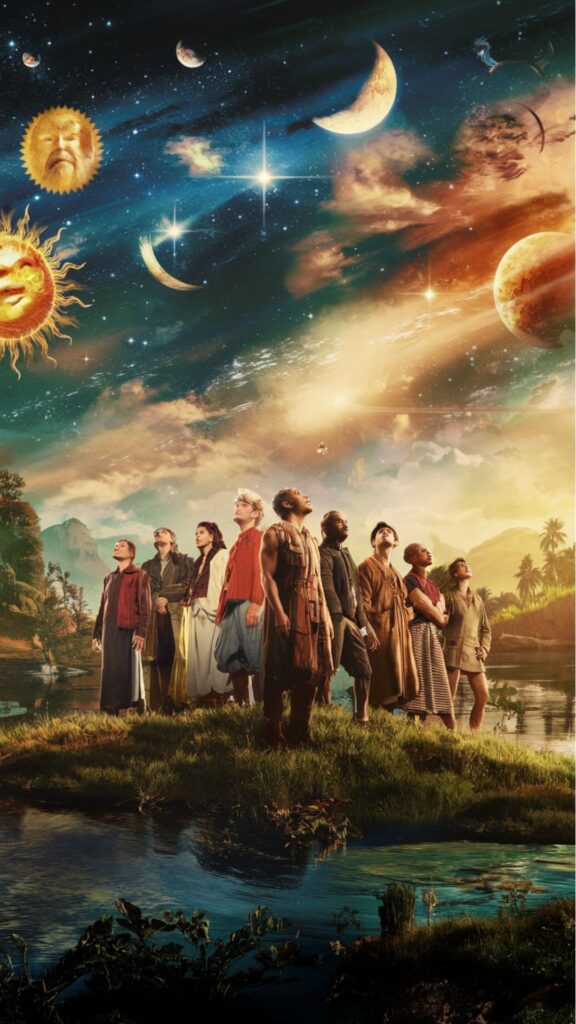
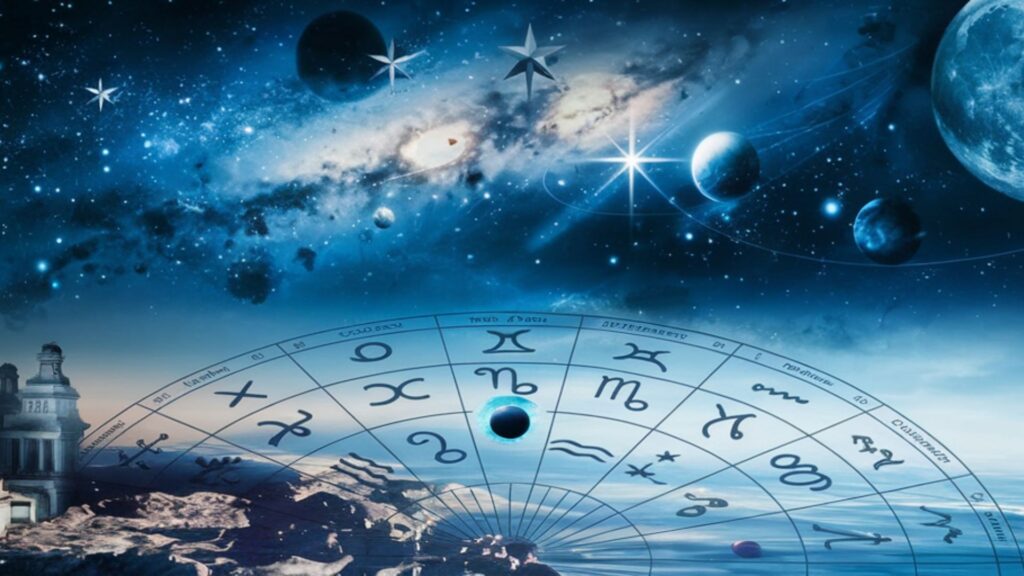
Dating back over 4,000 years, astrology emerged independently across various civilizations, from the banks of the Nile to the valleys of the Indus. Each culture developed its unique interpretation of the celestial dance above, yet all shared a fundamental belief: the movements of the heavens mirror and influence life on Earth.
In the cradle of civilization, Babylonian priest-astronomers meticulously documented celestial movements, creating the first systematic approach to astrology. They:
The Babylonians laid the groundwork for modern Western astrology through:
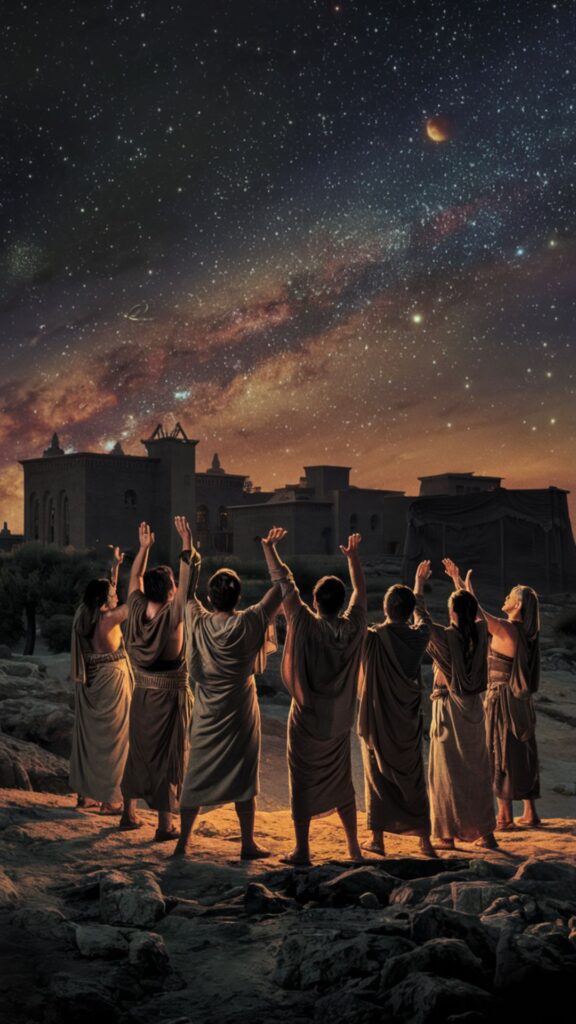
The Egyptian civilization enriched astrological knowledge by:
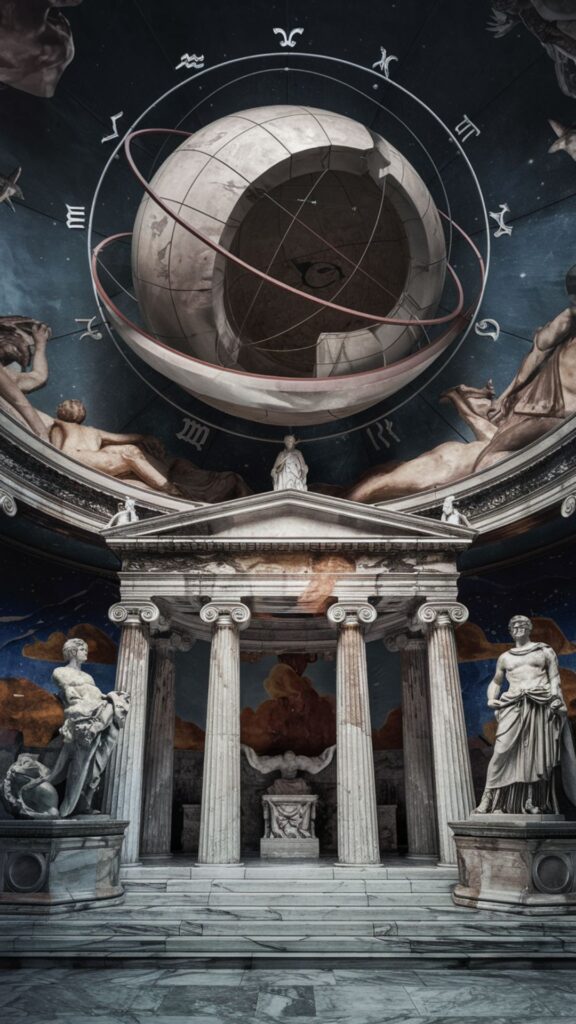
The Greeks transformed Babylonian astronomical knowledge into a philosophical system. Key developments included:
During the Middle Ages, astrology flourished as:
The Renaissance brought:
Today, astrology serves as:
Throughout history, astrology has influenced:
Modern astrology continues to:
Astrology’s journey from ancient stargazing to modern spiritual science reflects humanity’s enduring quest to understand our place in the cosmos. While its forms have evolved, its core purpose remains unchanged: to help us navigate life’s journey through understanding the celestial patterns above. As we continue to explore and adapt this ancient wisdom, astrology proves itself not just as a historical artifact, but as a living, breathing practice that continues to offer valuable insights for contemporary life.
The persistence of astrological practice across millennia and cultures speaks to its profound ability to provide meaning and guidance. Whether used for personal insight, timing decisions, or understanding relationships, astrology remains a powerful tool for those seeking to understand the cosmic dance of which we are all part.

Your first steps into magic should feel safe, grounded, and empowering. 🕯️ For the Embers of the World If you’re new to witchcraft and you’re
Your Pillar Guide to Practicing Magic with Confidence, Safety, and Heart Introduction Every magical journey begins with a single spark — a feeling, a pull,

Meet the Witchling Who Will Light the Way for New Practitioners Every magical path begins with a spark — that tiny, glowing feeling that whispers,

How to Recognize Growth in Self + Others Healing isn’t a straight line — it’s a spiral. A whirlwind that moves us forward, backward, and

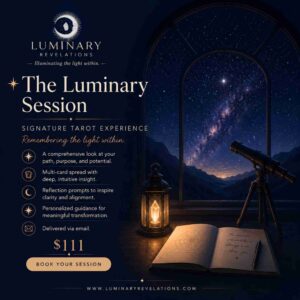
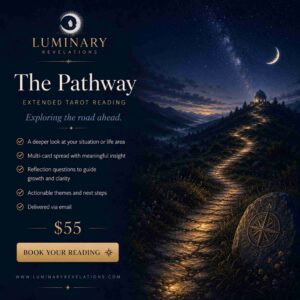
Experience the mystical allure of Luminary Revelations’ offerings, where ancient wisdom meets modern insight. From personalized tarot readings to artisanal candles and enchanting spellcraft, our products illuminate your path to self-discovery, empowerment, and spiritual fulfillment. Unlock the secrets of the universe and embrace the magic within with Luminary Revelations.